
Why an All-in-One Yoga Kit Can Be a Practical Addition to Your Practice
Setting up a home yoga practice can feel tedious. You compare mats, second-guess block sizes, and somehow end up with mismatched gear that never quite fits together.
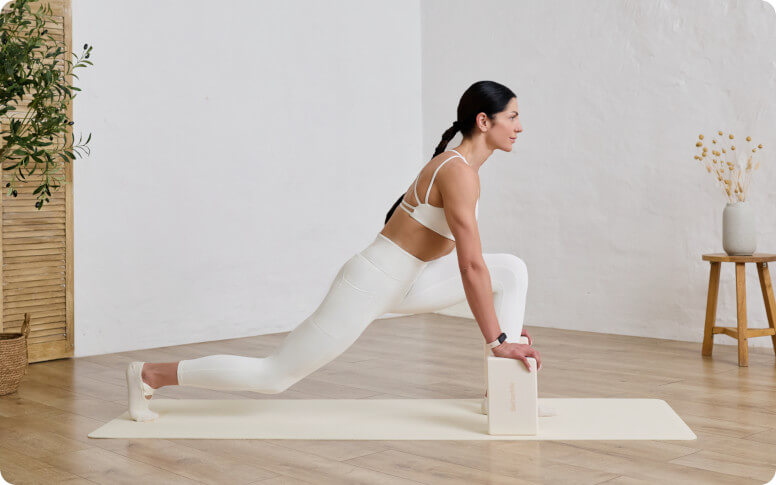
A yoga kit can take some of that guesswork off your plate. It brings several common yoga basics together in one kit.
In this article you'll learn what a complete set usually includes, when buying separately makes more sense, and how each piece supports your practice. You'll also get simple tips to set up your space at home.
Is It Better to Buy Yoga Props Separately or as a Set?
A yoga kit bundles your basics together, while buying separately gives you precise control over each item. Both work well - the right choice depends on how much you want to customize.
Buying piece by piece can get fiddly. You're often juggling several decisions at once, like:
- Comparing different sizes, thicknesses, and materials
- Checking whether the items actually work together
- Placing several separate orders from different sellers
- Ending up with a mismatched collection
- Spending extra time researching basic gear
A yoga starter set skips most of that. The pieces are chosen to coordinate, so you can set up and move on.
That said, separate items shine when you have specific needs. Maybe you want a thicker mat, denser blocks, or a particular material. In that case, picking each piece yourself makes sense.
How Do Sets and Separate Props Compare?
Here's a quick side-by-side to help you weigh your options.
| Factor | All-in-One Yoga Kit | Buying Separately |
|---|---|---|
| Setup time | Quick—one order, coordinated pieces | Slower—research and multiple orders |
| Customization | Limited to what's in the set | Full control over each item |
| Look and feel | Matching, consistent | May vary by item |
| Best for | Beginners or anyone replacing old gear | People with specific preferences |
Takeaway: A set saves time and effort. Separate items give you precision. Neither is "better" - it's about what fits your needs.
What's Usually Included in an All-In-One Yoga Bundle?
Many yoga kits include basics such as a mat, blocks, or other supportive props, depending on the set. Together, these cover the basics for a home yoga practice.
Each item has a simple job. Here's how they tend to work.
What Does a Yoga Mat Do?
A yoga mat gives you a designated surface for standing, seated, and floor-based movements. It marks your space and adds a layer of cushioning underfoot.
When choosing a mat, a few things tend to matter:
- Cushioning: comfort for knees, hips, and wrists during floor work
- Grip: a surface that helps you feel steady as you move
- Size: enough room to stretch out fully
- Storage: something that rolls up and tucks away easily
There's no single "right" mat. It comes down to how you like to practice and the space you have.
What Are Yoga Blocks For?
Yoga blocks bring the floor closer to you. They offer support in certain positions and give you more ways to adapt a pose.
Blocks aren't only for beginners. Many experienced practitioners use them too, for things like:
- Positioning and steadier support
- Modifying poses to match current mobility
- Exploring pose variations
- Making certain shapes feel more manageable
If a stretch feels just out of reach, a block can meet you where you are.
How Does a Yoga Strap Help?
A yoga strap extends the reach of your hands during selected poses. It can help you hold a position without forcing your range of motion.
Straps are handy when your hands don't quite meet. Instead of straining, you hold the strap and ease into the shape at your own pace.
If you'd like a coordinated starting point, this yoga kit brings a mat, blocks, a foam roller, and ankle weights together in one set. It's an optional way to gather your basics without sourcing each piece yourself. Before buying, check the product page for the exact dimensions, materials, and number of blocks.
How Can Yoga Props Support a More Comfortable Practice?
Yoga props help you adapt poses to your body rather than the other way around. They meet your current mobility, proportions, and experience level.
Props won't prevent strain or guarantee deeper stretches. What they can do is give you more control and gentler options.
Here's how a mat and blocks plus a strap can support your sessions:
- Provide extra support in selected positions
- Bring the floor closer or make selected positions easier to approach
- Help you explore pose variations
- Make certain positions feel more manageable
- Offer cues for positioning and alignment
- Reduce the urge to force a stretch
Used thoughtfully, props let you work within a comfortable range. That tends to make practice feel more approachable, especially on stiffer days.
What Are the Benefits of Choosing a Matching Yoga Set?
A matching set offers practical convenience and a consistent look for your space. The pieces are picked to go together, so you skip the mixing and matching.
For many people, the appeal is both function and feel. A coordinated setup can include:
- A consistent look across your home workout area
- No need to match individual items yourself
- Easier organization and storage
- A neutral color, like gray, that suits different interiors
- A ready-to-use collection of basic props
Some people find an organized, tidy setup more inviting.
| Consideration | Matching Yoga Set | Mismatched Gear |
| Visual consistency | Coordinated colors and style | Varies by item |
| Storage | Often easier to store together | May need separate solutions |
| Decision-making | Done for you | You choose each piece |
| Fit for your space | Neutral tones blend easily | Depends on what you pick |
How Can You Start Using a Yoga Kit at Home?
Start by clearing a flat, open area with enough room to move freely. From there, a few simple steps can help you settle in.
Try this when setting up your home yoga practice:
- Pick your spot. Choose a clear, flat area away from furniture and obstacles.
- Lay out your mat. Position it with space around all sides.
- Keep props close. Place blocks and your strap within arm's reach.
- Begin gently. Start with familiar or beginner-friendly movements.
- Use props to adapt. Modify poses instead of forcing a shape.
- Follow good guidance. Use clear instructions from a qualified instructor or trusted program.
- Check your gear. Look over your equipment now and then for wear or damage.
Go at your own pace. There's no rush to nail every pose on day one. Small, repeatable sessions tend to feel better than one long, ambitious one.
A yoga kit can be a practical, low-effort way to gather your basics in one go. It saves you from comparing items, placing multiple orders, and ending up with a mismatched collection.
Still, a kit is optional—not essential. You can practice beautifully with a single mat or even a soft surface and an open mind.
If you'd like a coordinated starting point, an all-in-one yoga bundle offers a convenient shortcut. Clear your space, keep your props within reach, and begin with movements that feel comfortable. The rest follows at your own pace.
Related Links
- Yoga for Self Confidence
- Yoga for Healthy Hair
- 2 Indian Beauty Secrets
- Staying Young with Yoga
- 6 Foods for Glowing Skin
- Headache - Get Relief Now
- Can Yoga Make you Taller?
- 4 Beauty Secrets for the Eyes
- 7 Foods to Improve your Mood
- Practice Yoga with a Loved One
- Enhance your Beauty with Yoga
- Look younger with 6 Yoga Pose
- Anti-Aging Secrets of Facial Yoga
- How to Stay Young through Yoga
- 10 Healthy Summer Cleanse Foods